


News Blog
Latest news on Spanish companies and economy

COFIDES injects around 50 million into Europastry to boost its push into the U.S. market.
COFIDES has formalized an investment of €49.6 million in Europastry through the Fund for Investments Abroad (FIEX) to support the capital increase of the multinational and the acquisition of 100% of Highland Baking, an American bakery company oriented to the food-service channel. The operation, within the framework of a total expansion of €300 million led by MCH Private Equity, seeks to consolidate Europastry's presence in North America, increase its productive capacity and leverage the distribution network and knowledge of the local consumer. Europastry, headquartered in Barcelona and with a catalog of more than 4,900 references, aims to scale its global turnover and reinforce its position among the largest operators in the sector, also counting on the institutional backing provided by COFIDES.

Glovo entrusts the leadership in Andalusia to engineer Iñaki Gual.
Glovo has announced the appointment of Iñaki Gual as the new regional director for Andalusia. An industrial engineer from EUSS and with more than ten years of experience, Gual returns to the company after having been responsible for expansion in the region for more than three years and after an entrepreneurial stint at an artificial intelligence platform. From the regional headquarters in Seville he will lead the acquisition and loyalty of merchants, in addition to driving the digitization of local commerce. Glovo has more than 5,000 associated establishments in Andalusia — 85% SMEs — and a presence in 70 localities. One of the objectives set is to increase the network of associated merchants by 10% by 2027, expanding categories such as supermarkets, parapharmacy, and express deliveries.

Juan Roig's business school allocates 1.5 million euros for student scholarships.
EDEM School of Entrepreneurs, the prestigious educational institution driven by Mercadona president Juan Roig and a fundamental pillar of the Marina de Empresas entrepreneurial ecosystem, has announced an ambitious investment of 1.5 million euros entirely dedicated to its scholarship program for the current academic year. This strategic initiative reinforces the school's founding commitment to identifying, attracting, and developing young talent, ensuring that financial constraints do not pose an insurmountable obstacle to access first-rate business training. According to the official figures provided by the institution, the magnitude of this program allows one in every three students enrolled in its degree programs to have some form of financial aid this year. This translates into a total of 200 beneficiaries, a record figure that underscores the school's social vocation. The central objective is to democratize access to its classrooms and prepare future leaders and managers for the complex challenges of the global job market from the very beginning of their university careers. EDEM’s aid system is structured mainly into two large modalities tailored to different profiles: the Foundation Scholarship and the Excellence Scholarship. The Foundation Scholarship is specifically designed to support those students who show high potential and an entrepreneurial vocation but whose family socioeconomic circumstances make it difficult to bear the cost of training. The Excellence Scholarship, for its part, aims to reward extraordinary effort and the most outstanding academic records, thereby promoting a merit and personal improvement culture that defines the institution’s DNA. Depending on the modality and the applicant’s profile, the aid can range from partial coverage of tuition to full tuition waivers. Hortensia Roig, president of EDEM, has highlighted the transformative impact of these measures, stating that “a scholarship can radically change a person’s future.” The administration has recalled that EDEM, as a non-profit foundation, has accumulated more than two decades of experience in awarding scholarships to students, with the firm conviction that talent, effort, and a positive attitude deserve to find real opportunities for growth, regardless of the resources available. To illustrate the success of this model, the institution points to cases such as Víctor Ketterer Molina, a fourth-year student in the Degree in Business Administration and Management (ADE). After completing his Vocational Training studies, Víctor was able to transition to university education at EDEM thanks to a Foundation Scholarship that covered 100% of his academic costs. This aid has allowed him not only to train in an environment of excellence but also to undertake internships in various multinationals and gain international experiences that have enhanced his employability. Located in the Marina de Valencia, EDEM is part of a unique entrepreneurship hub alongside the accelerator Lanzadera and the investment company Angels Capital. With this new endowment of 1.5 million euros, Juan Roig’s school consolidates itself as an essential engine for talent development and wealth creation in society, promoting practical education and deeply connected to the real needs of the business fabric.
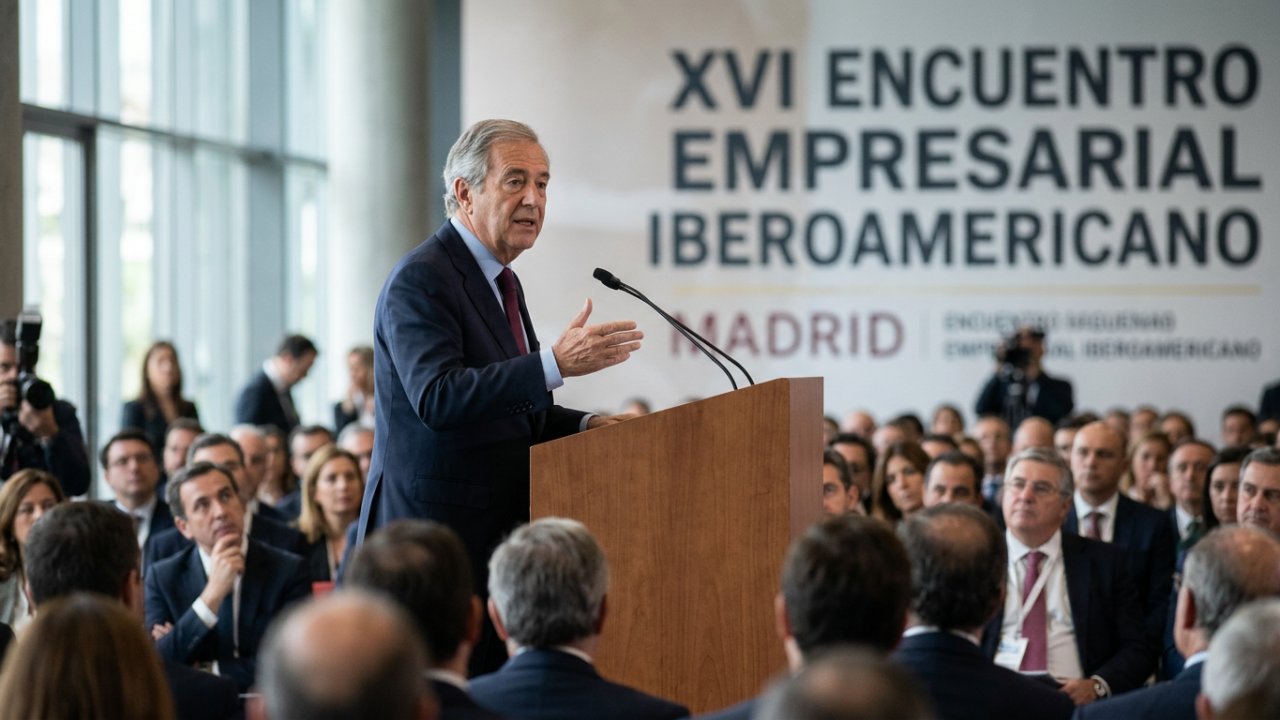
The Chamber of Spain defends public-private collaboration to attract investment to Ibero-America.
Madrid, November 4, 2026. The president of the Spanish Chamber of Commerce, José Luis Bonet, has underscored the strategic relevance of public-private collaboration as a fundamental driver to attract investment and foster economic development in Ibero-America. These statements were made during his remarks at the roundtable titled “Where does Ibero-America stand in the world,” held within the framework of the XVI Ibero-American Business Meeting in Madrid. The event, which took place on November 3 and 4 in the emblematic Plaza de Toros de Las Ventas, brought together more than 2,000 business leaders, government representatives, and international organizations from 22 countries. Bonet participated in the debate alongside prominent figures such as José Manuel Salazar Xirinachs, executive secretary of ECLAC; Juan Cerruti, chief economist of Grupo Santander; and Amparo López Senovilla, president of ICEX. The session was moderated by Trinidad Jiménez, president of the Brazil-Spain Chamber of Commerce and of the Ibero-American Business Foundation (FIE). During his speech, Bonet emphasized that Ibero-America is facing a historic opportunity to strengthen its global position amid the current reorganization of international trade. Citing World Bank forecasts, he noted that regional growth of 2.2% is expected for the year 2026. He also recalled the strong economic link between Spain and the region, highlighting that Latin America concentrates approximately 30% of Spanish investment abroad, a figure close to 200 billion euros. Nevertheless, the president of the Spanish Chamber also identified several critical challenges that must be addressed to consolidate this capital flow. Among them, he mentioned the imperative need to guarantee legal certainty, reduce the fragmentation of regional markets, improve infrastructure, and facilitate access to financing, with a special focus on small and medium-sized enterprises (SMEs), which make up the bulk of the productive fabric. Bonet defended the essential role of chambers of commerce as institutional bridges between the private sector and public administrations. In this sense, he valued the “Declaration of Valladolid,” a document approved by the Ibero-American Association of Chambers of Commerce (AICO) that sets out concrete proposals to improve competitiveness and integration. For the first time, these recommendations will be directly conveyed to the Ibero-American Summit of Heads of State and Government, seeking to ensure that the voice of businesspeople has a real impact on the region’s public policies. The XVI Ibero-American Business Meeting thus consolidates itself as the reference platform for business dialogue in the region, operating under the motto “Ibero-America facing the challenges of the global economy: strengthening public-private collaboration.” This forum, organized by the Ibero-American Business Council (CEIB), the Ibero-American General Secretariat (SEGIB), and the CEOE, serves as a precursor to the XXX Ibero-American Summit of Heads of State and Government. Bonet’s participation not only represented the Spanish Chamber, but also the entire network of Ibero-American Chambers of Commerce, reinforcing the unity of action of the chamber system in the face of challenges such as digitalization, the energy transition, and food security.
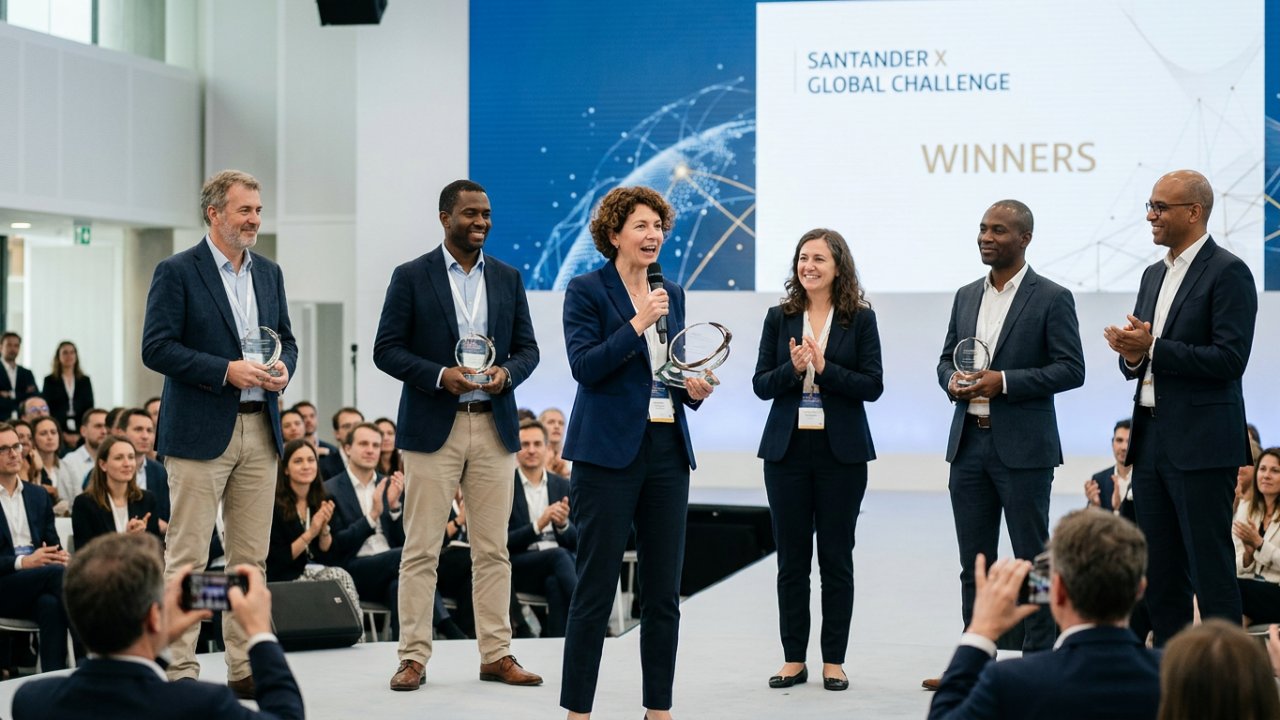
Six quantum and AI solutions for business challenges win the Santander X Global Challenge | The Quantum AI Leap
Banco Santander has announced the winners of the Santander X Global Challenge | The Quantum AI Leap, an international challenge designed to promote the practical application of quantum computing and artificial intelligence in the business environment. In this edition, six companies stood out among more than 440 applicants from ten countries, consolidating the role of these technologies in solving complex problems and transforming key sectors. The contest, driven by the bank in collaboration with strategic partners such as IBM, Bluzec, and Oxentia Foundation, has awarded three Spanish companies, one German, one British, and one American. The awarded solutions address critical challenges ranging from protecting communications against future quantum threats to optimizing industrial processes and improving the infrastructures needed for AI. In the Startups category, the companies awarded 10,000 euros each have been Qascade (United Kingdom), G2Zero (Spain), and Qodex Quantum (United States). Qascade develops a photonic interconnection platform for processors, while G2Zero focuses on communications security and Qodex Quantum on quantum software solutions. In the Scaleups category, with a prize of 30,000 euros per project, the winners have been Quantum Mads (Spain), Kipu Quantum (Germany), and Luxquanta (Spain). These companies stand out for their ability to scale systems and translate quantum computing power into real industrial applications, such as financial optimization or advanced cryptography. In addition to the financial incentive, the winners gain access to the Santander X 100 global community, which brings together the most innovative companies in the bank’s ecosystem. They will also receive specialized support from IBM, including sessions on artificial intelligence, access to quantum innovation teams, and the opportunity to present their projects to IBM Ventures. Bluzec will provide specialized services and training valued at up to 10,000 euros, facilitating access to investment and collaboration networks. The selection of the winners was carried out after a rigorous evaluation process that culminated in 20 finalists presenting their proposals to an international jury. The selected projects demonstrate not only technical excellence but also clear commercial viability and potential significant societal impact. For example, industrial simulation solutions enable cost and development-time reductions in sectors such as energy or healthcare, while advances in quantum cybersecurity are fundamental to protecting critical infrastructure in an increasingly digital world. IBM’s support is a fundamental component of this prize. By providing access to its cutting-edge quantum hardware and its AI expertise, IBM enables these emerging companies to overcome technical barriers that would otherwise be prohibitive. The possibility of interacting with IBM Ventures also opens doors to future funding rounds, vital for the growth of scaleups in such a competitive market. In short, the Santander X Global Challenge | The Quantum AI Leap is not just a competition, but an acceleration platform that connects innovative talent with the resources needed to scale. The geographic diversity of the winners underscores the global nature of the quantum tech race and the importance of international collaboration to lead the next major industrial revolution. With this initiative, Banco Santander reaffirms its commitment to entrepreneurship and innovation as engines of economic and social growth in the countries where it operates.

From starting at 16 years old to saving thousands of euros for Mallorca-based companies thanks to AI
Marc Hurtado, a young entrepreneur from Palma who is currently 19 years old, has managed to turn a teenage curiosity into a successful company that is revolutionizing operational efficiency in Mallorca. Under the name KAIRO AI, his company specializes in implementing artificial intelligence solutions and process automation, already boasting a portfolio of 17 local companies that have seen their operating costs drastically reduced thanks to his technological intervention. Hurtado’s trajectory began precociously at 16. While pursuing his studies, the launch of tools like ChatGPT allowed him to glimpse a future where the most tedious administrative tasks could be executed by algorithms. With an unusual vision for his age, he decided he did not want to be a mere user of technology, but an architect of solutions for the business sector. With the backing of his father, who was his first investor and moral support, Marc founded his project while still underage, showing a maturity and management capability that soon drew the attention of the Mallorcan market. The core of the service KAIRO AI offers is time liberation for workers. Marc focuses on identifying repetitive processes that consume valuable hours, such as invoice management, order processing in ERP systems, or data updates in CRM. By using generative AI and hyperautomation tools, he makes tasks that previously took minutes or hours be completed in milliseconds. For example, his systems can reconcile invoices in just over three seconds or register orders almost instantaneously, eliminating human error and allowing staff to devote themselves to creative functions or higher-value customer service. In addition to his role as founder, Marc has invested significantly in his technical training, specializing in critical areas such as designing information-retrieval assistants (RAG), prompt engineering, and AI governance. This technical foundation enables him to offer precise audits where he calculates the potential savings for each company before starting any project. In many cases, Mallorcan SMEs manage to recover more than 35 hours of work per month per employee, which translates into a positive economic impact that can exceed 10,000 euros per year per organization. The success of Marc Hurtado and KAIRO AI is a testament to the potential of Balearic youth and to the capacity of artificial intelligence to democratize technological efficiency. His practical approach, focused on measurable results and close support to companies until the systems operate autonomously, has positioned his startup as a benchmark on the island. His story shows that innovation has no age when it is combined with effort, ongoing training, and a clear vision of the real needs of the local business fabric.
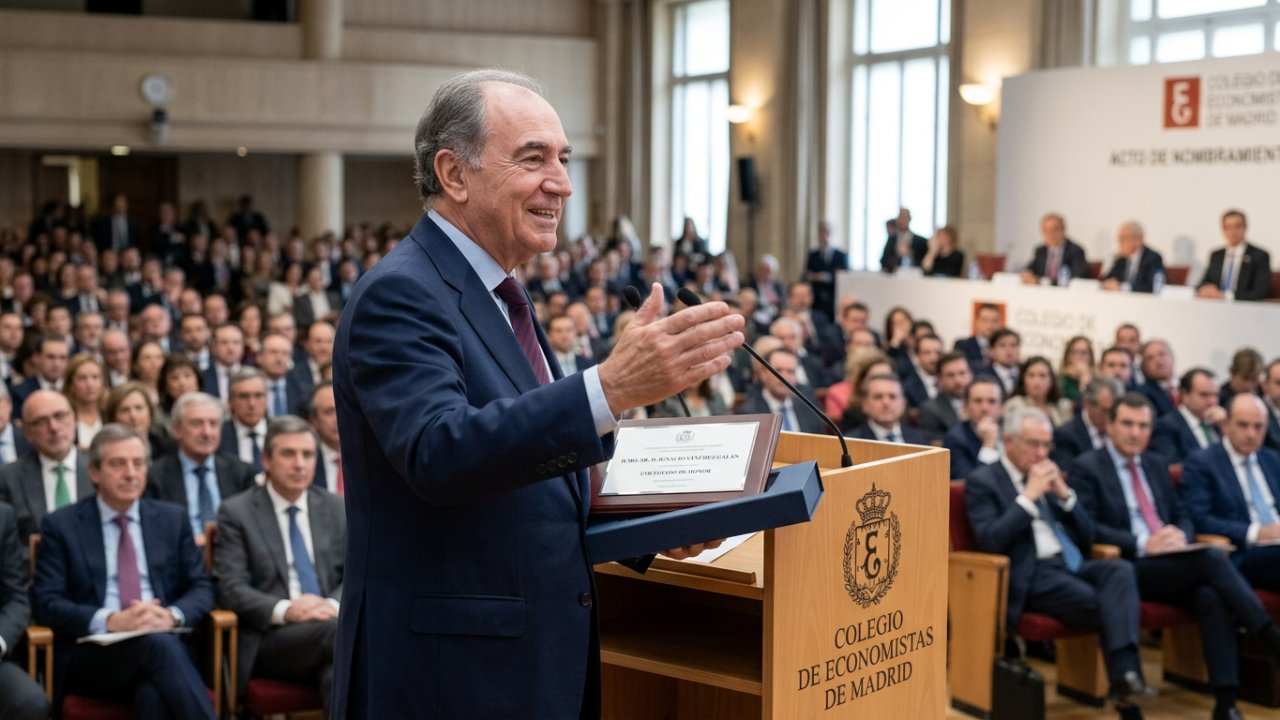
The president of Iberdrola states that the company faces "the greatest growth prospects in its history."
The executive president of Iberdrola, Ignacio Sánchez Galán, has been distinguished as an honorary fellow by the Madrid College of Economists in a solemn ceremony held at the Paraninfo of the Complutense University. During his speech, Galán stressed that the energy company is at a crucial moment, facing what he described as “the greatest growth prospects in its history.” This optimism is based on the unstoppable rise of electrification, a process the executive considers a historic opportunity for the structural transformation of the European and global economy. Galán underscored that the transition to a fully electrified model would allow Europe to drastically reduce its dependence on fossil fuel imports, replacing an inefficient energy-spending model with one based on high value-added productive investments. In this sense, Iberdrola’s president estimated that the continent will require annual investments of more than 200 billion euros over the next decade to complete this ambitious transformation. About half of this figure should be allocated as a priority to the modernization, digitalization, and expansion of electricity networks, which act as the backbone of the new energy system. Regarding Iberdrola’s specific plans, the executive president previewed figures that reflect the company’s solidity. The company expects its investments could reach 80 billion euros over a horizon of barely five years, which would boost the group’s net profit to 10 billion euros annually. These projections coincide with the celebration of the 125th anniversary of the electric utility’s founding, which by 2026 stands as Europe’s largest company in the sector and second worldwide by market capitalization. Currently, the group has assets valued at 165 billion euros and a stock market valuation around 150 billion. The recognition awarded by the Madrid College of Economists, whose laudatio was delivered by Pablo Hernández de Cos, Director General of the Bank for International Settlements (BIS) and former governor of the Bank of Spain, highlights Galán’s track record during his 25 years at the helm of the utility. Hernández de Cos praised the executive’s extraordinary foresight in decisively betting on renewable energies and electrification long before they became priorities on the global climate agenda. For her part, the dean of the College, Amelia Pérez Zabaleta, emphasized Galán’s contribution not only to the company’s success and Iberdrola’s international expansion but also to prosperity, job creation, and Spain’s economic cohesion. Galán concluded his speech by reaffirming the company’s founding values — effort, integrity, loyalty, and commitment — as the unwavering pillars that have enabled Iberdrola to navigate the deep technological and market changes for more than a century. The executive stressed that, although technologies and markets have evolved dramatically since 1901, honoring one’s word and teamwork remain the fundamental engines for success and long-term sustainability. He also took the opportunity to remind the forum that regulatory stability and a predictable investment framework are essential to mobilize the enormous amounts of capital needed for the total decarbonization of the economy.

The burden of tax paperwork in the European Union: 8.6 billion
The Expansión article analyzes an unprecedented joint statement signed by 23 of the most influential business, financial, and professional organizations in the European Union. This lobbying group, representing a broad spectrum of the continental economy, has raised its voice to denounce the excessive “fiscal red tape” choking European companies, calling it a critical drag on the bloc’s competitiveness in an increasingly aggressive global market. The central figure of the complaint is the 8.6 billion euros in potential annual savings that the European Commission itself has identified in its administrative simplification plans. According to the Commission’s 2026 Work Programme and recent simplification reports, implementing six omnibus legislative packages would significantly reduce compliance costs for businesses and citizens. However, the 23 signatory organizations warn that these savings will only materialize if there is real political will to accelerate the adoption of these measures and simplify key regulations in critical areas such as VAT in the Digital Era (ViDA), the BEFIT framework for corporate tax on performance, and the FASTER tax withholding procedures. The manifesto emphasizes that the current administrative burden is not only a direct financial cost, but also diverts valuable resources that firms, especially small and medium-sized enterprises (SMEs), could devote to innovation, the green transition, and productive investment. The Commission has set itself the ambitious goal of reducing administrative burdens by 25% overall and by 35% for SMEs, which would amount to an estimated total long-term saving of 37.5 billion euros. The 8.6 billion mentioned represents the first phase of this plan, focused on proposals already presented or on immediate approval pathways. The organizations insist that the fragmentation of the EU’s tax system is one of the main barriers to the full functioning of the Single Market. Citing recent reports on competitiveness, such as the one prepared by Mario Draghi, the article highlights that internal regulatory barriers have a negative impact comparable to trade tariffs, making Europe less attractive compared with competitors such as the United States or China. The article details how the fragmentation of tax rules forces cross-border operators to face a tangle of divergent forms, deadlines, and information requirements among the 27 Member States. This situation is particularly onerous in the digital taxation and services sphere, where the lack of harmonization creates legal uncertainty that hampers the international expansion of European startups. The 23 organizations stress that the EU cannot afford to maintain obsolete bureaucratic structures. It is also highlighted that the digitalization of tax administration has often been implemented in a disjointed manner, adding new layers of electronic reporting obligations without eliminating the old ones. The joint statement advocates a “digital by default” approach and the reuse of data by authorities to prevent businesses from having to supply the same information multiple times. The backing of these entities exerts significant political pressure on the European Commission and national governments to make competitiveness the absolute priority of the legislature.

Sandra and Marta Ortega, the two daughters of Amancio Ortega: one chairs Inditex, the other is the richest woman in Spain
At ninety, Amancio Ortega has consolidated one of the most influential business empires in the world through Inditex, the parent company of Zara. Yet the focus of attention now shifts to his two daughters, Sandra and Marta Ortega, who embody two very different ways of managing the immense family legacy. While Marta Ortega Pérez leads corporate strategy from the presidency of the textile group, her elder sister, Sandra Ortega Mera, remains the richest woman in Spain, operating from near-total discretion. Marta Ortega, daughter of Amancio and his second wife, Flora Pérez, assumed the presidency of Inditex in 2022, marking the start of a new era for the company. Her management has been characterized by elevating Zara’s brand positioning, betting on higher-quality collections and collaborations with prominent figures from the fashion and photography worlds. Marta is the visible face of the multinational’s continued success, representing the modernization and international projection of the Galician giant in an increasingly competitive global market. On the other hand, Sandra Ortega Mera, the offspring of Amancio’s first marriage to the late Rosalía Mera, represents the more reserved profile of the family. With a fortune estimated at €11.5 billion according to Forbes’ 2026 list, Sandra is the second-richest person in the country, behind only her father. Unlike her sister, she does not hold executive roles at Inditex, though she is the second-largest individual shareholder with a 5.05% stake. Her professional activity centers on managing Rosp Corunna, the asset-holding she inherited from her mother. Through this company, Sandra diversifies her investments in sectors such as real estate, hospitality, and pharmaceuticals, highlighting her presence in PharmaMar. Sandra’s life unfolds in Oleiros, A Coruña, where she maintains a simple lifestyle and stays away from the social events often frequented by the ultra-rich. Her commitment extends to the social arena through the Paideia Galiza Foundation, dedicated to the integration of people with disabilities and to promoting employment for vulnerable groups. This philanthropic work continues the efforts begun by her mother, Rosalía Mera. The article highlights the contrast between the two sisters: one, the executive who steers the course of global fashion; the other, the discreet investor who protects her privacy while managing a record-breaking estate. Together, they ensure the continuity of Amancio Ortega’s legacy, who this year has seen his fortune rise 13.9% thanks to Inditex’s excellent stock performance. The combined wealth of Spain’s 100 richest fortunes reached a historic high in 2026, with the Ortega family leading this unprecedented wealth ranking.